Modern life can feel jammed full. Homes can fill up with items we do not touch. Days can get booked with tasks and events. Phones and computers can also pile up with files, pings, and unread messages. When you add more and more, you often lose time. You spend energy sorting and handling it all. Still, more things do not always lead to a better life. Minimalism is one way to face that mess. It does not push you to buy more or keep collecting. Instead, it asks you to think harder about what truly earns your time, focus, cash, and room at home.
To many people, minimalist living is not only about having fewer things. It is also about taking out what brings little value. Then you make space for what matters more. Studies tied to materialism and happiness often point to a link between buying values and lower well-being. In the same area, experiences, close ties, self rule, and clear choices seem to support life satisfaction in a more direct way. Simple living does not mean you must throw everything away. A more useful step is to ask a plain question. Does this item, routine, promise, or purchase actually help me, in a real way?
What Is Minimalist Living?
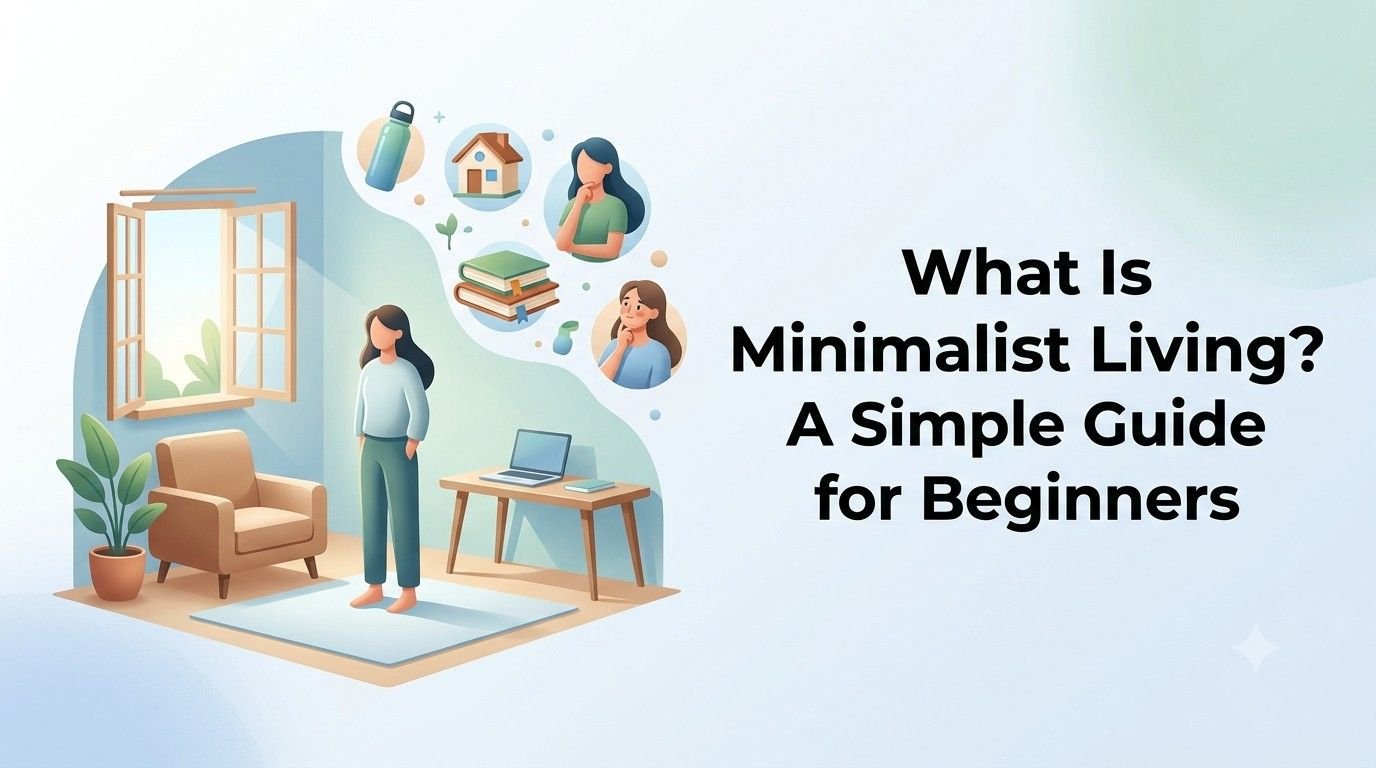
Minimalist living is a way of life built on careful choices. It aims for less clutter and more focus. It also means directing your effort toward what counts most. Instead of treating success like a big pile of goods, it asks you to judge what you keep. You look at usefulness, deeper meaning, and what fits your own goals.
This style can change from person to person. For one person, it might mean a smaller set of clothes. It could also mean a home that stays neat and calm. For another, it could mean reducing unnecessary subscriptions, avoiding impulse purchases, simplifying a calendar, or spending less time scrolling through social media. The common thread is intentionality rather than a specific number of possessions.
Minimalism Is About Value, Not Deprivation
Many people think minimalism is about giving up everything fun. It is not that. If a shelf of books, a guitar, a painting, a set of cooking tools, or a hobby truly helps your day, you do not have to cut it just because someone else thinks you should.
The point is to separate slow thought from quick habit. Getting something that fits your goals is not the same as grabbing an item because a banner told you to, a trend pushed you, a sale felt urgent, or someone else made you feel behind. Minimalism puts a stop sign between the first urge and the checkout.
Why more people look at minimalist life
One reason is easy to see. Today it is simple to buy things. You can order almost anything fast online. Social apps also keep showing new homes, new styles, new gadgets, and new trends. After a while, it can turn into a pattern. You buy for a short rush. Then you live with extra stuff and extra bills.
Minimalism gives you another way to judge what comes next. Rather than asking, “What should I buy now?” you start with, “What do I already own, and does it work for me?” With that change, clearing out your space can feel more like choosing than scrubbing. You are picking what helps your home support how you want to live.
The Main Principles of Minimalist Living
1. Own Things That Serve a Purpose
A basic rule for minimal living is simple. Keep items that you use, value, or truly like. If you reach for an object often, it belongs. Something with a personal story can also stay, even if it does not help you day to day. The harder part is spotting things you keep only because you feel bad about letting them go. Just because an item cost a lot, worked once, or was a gift does not mean it still has a role. Look at what the item does for you now, not what it used to be worth.
2. Reduce Clutter Gradually
Many decluttering tips talk like it is a huge weekend task. You can move at a calmer pace. Pick just one spot first. Try a drawer, a small shelf, one type of item, or a tiny room. Then decide what stays and what goes before you start the next area.
A useful process is to separate items into a few simple groups:
- Keep because it is useful or meaningful.
- Donate or give away because someone else may use it.
- Recycle or dispose of items that are damaged or unusable.
- Set aside uncertain items and review them later.
This approach reduces decision fatigue and makes decluttering for beginners much easier to maintain.
3. Buy Less, Choose Better
Minimalism is not about never buying. It is about buying with care. Before you pay for something, stop and ask if you already have an item that does the same job. Also check if the new thing really fixes a problem you face. Try a quick test. Ask yourself, “Do I still want it if it is not on sale?” If you would not want it at full price, then the deal might be making the want feel stronger than it should. This way of thinking can cut down on repeat buys. It can also help you plan what you shop for next.
4. Create Space for What Matters
A minimalist home is not meant to look empty. The goal is simpler than that. You want your space to work better day to day. When counters and shelves are not packed, small routines tend to feel easier. You are less likely to waste time hunting for items. You also spend less effort moving things just to get to what you need. With fewer extras, cleaning feels less like a task. In the end, a more mindful home can act like a calm backdrop instead of pulling your focus all day.
Minimalist Living at Home
Starting at home is usually the easiest move. Mess in a room is easy to see, so you know where to begin. You also do not need fancy furniture, a big renovation fund, or a picture ready space. A home can be minimalist without trying to impress anyone online.
Pick the spots that bother you most. Maybe your kitchen counters always end up piled up. Maybe your clothes storage is a mess. Maybe your desk turns into a dumping ground. Fix one area first. Do not try to overhaul the whole house in one weekend. You are not trying to make the place look bare. You want it to feel simpler to live in.
Minimalist wardrobe
A minimalist wardrobe is about what fits your real life. It is not about owning a huge pile of clothes. If you keep reaching for the same comfy items, then many extra pieces may not be helping you. They may just take up space.
Look closely at what you wear now. Keep the items that fit well, match your day to day routine, and feel good. Then slowly remove what no longer works for you. That can mean clothes that do not fit, do not match your style, or are not useful in your day to day life. A smaller closet can also make mornings easier since you have fewer choices.
Minimalist digital life
Minimalism is not only for things you can touch. Your phone, your laptop, and your social accounts can also get crowded.
Digital minimalism means cutting back on digital habits that eat your focus. It also means keeping what gives real value. You can delete apps you do not use. You can mute alerts you do not need. You can unsubscribe from emails you ignore. You can sort your files. You can also cut down on sites that pull you in too much. Think of your attention as something you manage. You would not stuff every corner of your home with random items. You also do not need to fill every free moment with screen content.
Minimalist Money Habits
A simpler way of living can also change what you spend. If you start thinking more before you buy, you might see that many “small” charges happen because it is easy, because something is trendy, or because you act on impulse. It is often not about a real need.
A minimalist budget is meant to steer your money toward what matters. It is not only about saying no to everything. A person may drop money for subscriptions they never use, then put more toward trips, learning, hobbies, or events that feel worthwhile. The aim is not harsh saving. The aim is to match spending with what you care about.
Minimalist Time Management
Your calendar can get messy too. Stuff like meetings, meetups, app alerts, errands, and constant quick tasks can crowd out rest. It can also block time for real focus.
Living with intention asks you to treat your schedule like your things. Look at each commitment and ask if it helps your duties, your relationships, your health, your aims, or your enjoyment. If an item keeps taking time but gives little back, you can rethink it. You might cut it, pass it to someone else, set it to run on its own, or take it out of your life. When your week is less full, you may find space for deep work and for real time off.
Minimalism and Mental Well-Being
A neat space does not fix stress or anxiety on its own. Still, for some people, less outside noise can make daily life feel easier to manage.
Studies have looked at how clutter connects to stress and how people feel overall. Some work also looks at how where you live can shape stress reactions. The key point is not that minimalism is a full cure. It is that your surroundings can affect how your day feels. When your space is calmer, daily routines can feel calmer as well. and digital environment can be one small part of building a lifestyle that feels easier to manage.
Minimalist Living Does Not Mean Owning Nothing
An apartment with very little in it can look like minimalism. Still, that look is only one way to do it. Many people have kids, books, hobbies, pets, or art. You can also keep comfy chairs and a kitchen that has what you need. That can fit minimalism too.
A key point is not just how little you own. The better question is why you have the things you have.Once you focus on that, simple lifestyle plans feel easier to follow. You are not trying to match someone else’s idea. You are building a simpler home that fits your life.
Common Minimalism Mistakes to Avoid
Trying to Declutter Everything at Once
A huge decluttering session can create exhaustion and regret. Slow progress is often easier to maintain because you learn what works as you go.
Copying Someone Else’s Minimalist Lifestyle
A single person’s minimalist home may not suit another person’s family, career, hobbies, climate, or culture. Use minimalism as a framework rather than a rigid rulebook.
Throwing Away Useful Things
Getting rid of something simply because it does not look minimalist can create unnecessary replacement costs. Practicality should come before aesthetics.
Turning Minimalism Into a Competition
Minimalism becomes counterproductive when people start competing over who owns the fewest items. The purpose is greater intentionality, not another status competition.
How to Start Minimalist Living Today
You can begin without buying anything. In fact, buying organizing products before decluttering often creates more stuff rather than solving the underlying problem.
Try this simple process:
- Choose one small area.
- Remove everything from it.
- Keep only items that are useful, meaningful, or genuinely enjoyed.
- Give every remaining item a practical place.
- Avoid immediately replacing what you removed.
- Revisit the area after a few weeks.
Trying a simple minimalist routine can work better for most people than forcing a full life change in one day.
How to keep a minimalist routine
Think of minimalism as habits, not one clean sweep. After you clear out extra things, watch for new clutter. A common rule is one item in, one item out. If you add something to a spot that is already packed, ask if an older item should go first. You can also pause before buying things you do not truly need.
Another helpful step is a quick check each month. Look at your clothes, your kitchen items, your digital files, your subscriptions, and other storage areas. Small fixes now keep the mess from coming back later.
What people get from minimalism
The upside of minimal living does not mean the same thing for everyone. Some people enjoy a calmer home. Others like spending less money. Some also enjoy having fewer choices to make. Many say they gain more time for friends, family, and activities that feel important.
Common potential benefits include:
- Less physical clutter.
- More intentional spending.
- Easier home maintenance.
- Fewer unnecessary purchasing decisions.
- More usable living space.
- Greater awareness of personal priorities.
- Less digital distraction.
- More time for meaningful activities.
Buying less does not automatically bring better days. The shift happens when you change how you pick what gets your time, money, and space.
Conclusion
Minimalist living is really about choosing on purpose. It is not about a fixed target for how much you must own. For some people, it leads to a calmer home. For others, it means a smaller closet that is easier to manage. It can also cut down on digital noise, so you can focus. Sometimes it shows up as spending more on what you truly use. It may even mean leaving room in your calendar instead of filling it.The steady path is to go step by step. First, note what still brings value. Next, let go of what does not. Then make small habits that help keep clutter from coming back. You do not have to keep every wall empty. You do not need to give away everything you own. Minimalism only asks that you notice what takes up your space, your money, your hours, and your attention. When “less” fits your real priorities, it stops feeling like a rule. It becomes a way to leave space for what matters.
Frequently Asked Questions
1. What does minimalist living mean?
Minimalist living means intentionally reducing unnecessary possessions, commitments, spending, and distractions so you can focus more on what genuinely matters.
2. Is minimalism about owning fewer things?
Not necessarily. Minimalism is about owning things intentionally, not reaching a specific number of possessions or creating an empty-looking home.
3. How can I start minimalist living?
Start with one small area, remove items you no longer use or value, organize what remains, and avoid immediately replacing what you removed.
4. Can minimalism save money?
It can help reduce impulse purchases and unnecessary consumption, although minimalism itself is not the same as extreme frugality.
5. What is digital minimalism?
Digital minimalism means intentionally reducing unnecessary apps, notifications, online content, and digital activities that consume attention without providing enough value.