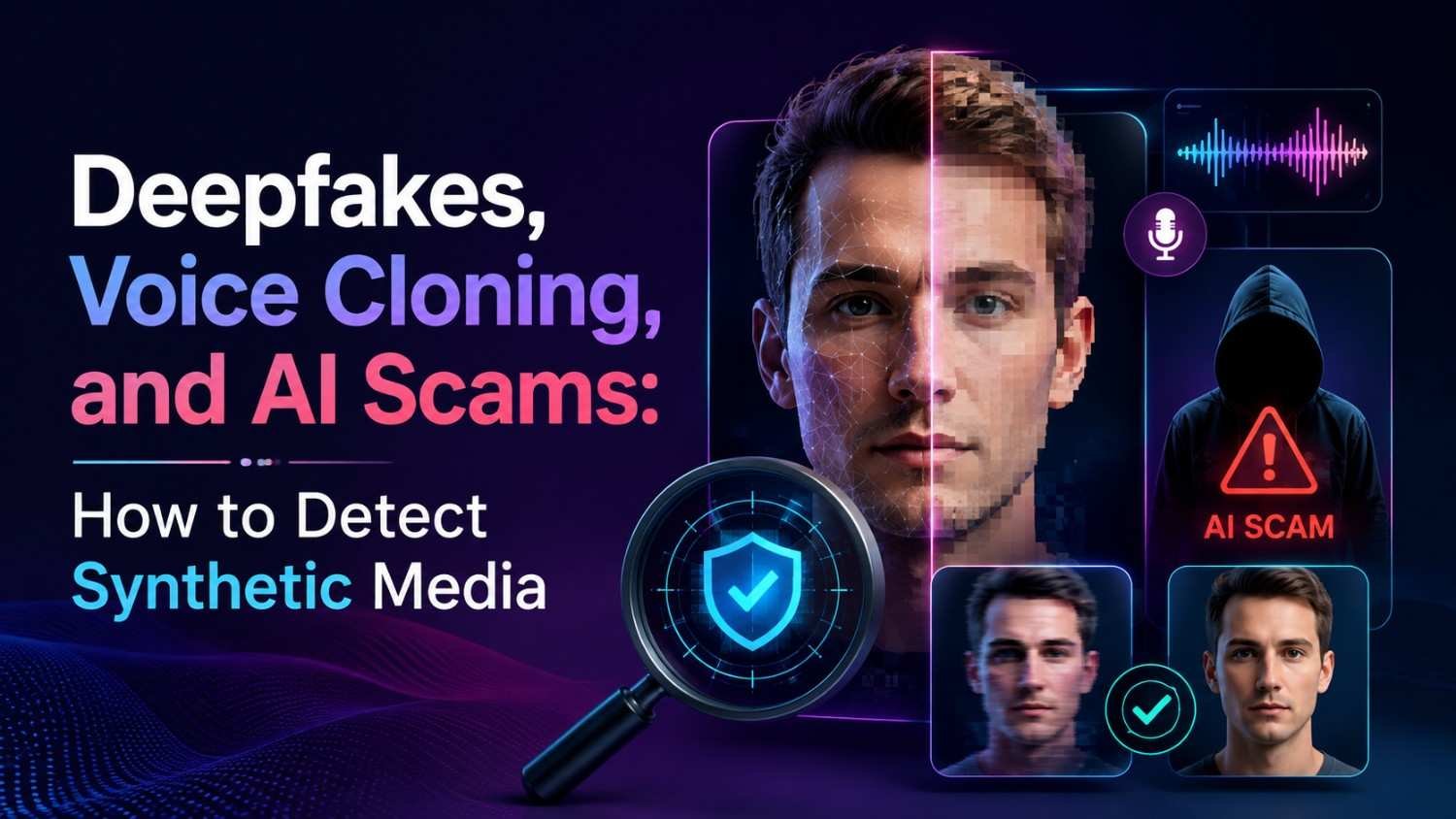
Artificial Intelligence has made the process of creating images, video , and voices quicker and a bit more reachable than ever before. While these innovations are helping companies improve productivity , upgrade customer experiences , and speed up content creation, they also bring new security concerns and trust problems. Right now, AI is able to produce real looking videos of people saying things they never said. It can copy voices from just a few seconds of audio, and it can even craft convincing scam messages that are tough to tell apart from legit communication. With each new wave, these tools keep getting sharper, so individuals , businesses, and larger organizations are dealing with higher levels of risk , especially when synthetic media is used to mislead, twist reality, or carry out fraud.
Because deepfakes , voice cloning, and AI generated scams are getting so popular, digital literacy is basically not optional anymore , it has turned into a necessary skill. Whether you get an unexpected call that claims to be a family member, you stumble on a viral video on social media, or you see an urgent text asking for money, knowing how synthetic media works can keep you from getting caught. This guide sort of walks through the technology behind AI produced content, the scams that show up most often, practical ways to spot altered material, and some solid habits for staying safe in a world that is getting more AI driven each day.
What Is Synthetic Media?
Synthetic Media is digital content that has been, partially or fully generated using Artificial Intelligence, and sometimes it just looks “real” even though it is computer-made. It covers AI-generated images, videos, voices, music, text, and even animations, that might seem authentic at first glance but are still synthetic.
Not all synthetic media is harmful. A lot of organizations actually use AI-generated voices for accessibility, virtual assistants language translation, customer support, entertainment, education , and content production. The trouble starts when synthetic media is made on purpose to mislead audiences, impersonate real people, spread misinformation, or enable financial fraud. This difference matters because the tech itself is neutral, it’s basically about how it gets used, whether it turns out helpful or malicious.
Understanding Deepfakes
Deepfakes are AI-generated or AI-manipulated videos and images, where the goal is to alter a person’s face, expressions, or voice in a way that feels believable. With advanced machine learning models, it analyzes thousands of images and videos, then it recreates facial movements so it can seem like someone said or did something they never did, or at least not in that way.
In the last few years, the quality of deepfakes has gone up a lot. Earlier versions often had visual issues that were easier to spot, but now the deepfake stuff can be very convincing , so verification really matters before treating a video as genuine evidence.
How Voice Cloning Works
Voice Cloning uses AI to kind of “repeat” a person’s voice, by learning how they speak—speech patterns, pronunciation, tone, rhythm, and other vocal traits—from recorded audio samples. In some cases, a short recording is enough, and then you get surprisingly real sounding speech, which is kinda scary, honestly. Businesses, use voice cloning for multilingual customer support, accessibility tools, audio books, and virtual assistants. But yeah, criminals also picked up on this tech. They may impersonate family members, executives, or even government officials, then use phone scams that try to push victims into sending money, or handing over sensitive info, before they can think twice.
Why AI Scams Are Increasing
AI tools have cut down the time, cost, and the technical know how needed to craft convincing fraudulent content. So scammers can automate phishing emails, create fake customer support replies, produce realistic voices, and also tamper with video feeds, all at scale. At the same time, people are trusting digital communication more and more. Social media clips, voice messages, video calls, and email threads often feel authentic, so AI powered deception can work better than older, more traditional scams.
Common Types of AI Scams
AI generated fraud keeps evolving, but a few familiar patterns show up again and again across industries and in everyday conversations.
Some of the most common scams include:
- Deepfake celebrity endorsements.
- Voice cloning emergency calls.
- Fake investment opportunities.
- AI-generated phishing emails.
- Fraudulent customer support chats.
- Business email impersonation.
- Fake job recruitment.
- Social media identity theft.
Recognizing these tactics helps reduce the likelihood of becoming a victim.
How to Identify Deepfake Videos
Even if deepfake tech keeps getting better, a lot of those altered videos still, kind of give themselves away when you look at them carefully. It’s like, if you pay attention , you start noticing small weird stuff. For example facial motion, eye blinking, lip timing that feels almost “off” or not quite locked, lighting that doesn’t match, shadows that come and go or don’t sit right, backgrounds that look warped in parts, head movements that are slightly too strange, or sudden little visual glitches. Sometimes you’ll also see expressions that don’t really line up, or transitions that feel wrong during fast motion, like the face is skipping between moods. Don’t bank on just one clue. Instead, check several indicators at the same time before deciding whether the content might have been manipulated.
Detecting AI-Generated Voices
Voice cloning tools now sound very convincing, but there are still signs, worth taking seriously even so. AI voices often show trouble with emotional steadiness, breathing rhythm that isn’t quite natural, pauses that feel random, or conversational interruptions that don’t flow. If somebody suddenly asks for sensitive data, or pushes for urgent financial help, over the phone, confirm who they are using another communication method first before doing anything. And don’t ever treat a familiar sounding voice as automatic proof, it doesn’t always mean it’s really them.
Verify the Source Before Trusting the Content
One of the simplest but also most effective ways to spot synthetic media is by checking where it originally came from. Just think it through, where did the content begin , was it actually picked up by reputable news orgs , and has the first publisher confirmed authenticity or not. You know those viral social media posts that pop up with no solid references, they really should get extra scrutiny before anyone reposts. When you cross-check like this , you usually cut down a lot of misinformation and those AI driven deceptions that spread so fast.
Use reverse image and reverse video searches
Often you can verify images and videos with reverse search tools that track earlier appearances all over the internet. Those reverse searches can show whether the media was modified , re used , taken out of context, or wrongly credited to some brand new event. Of course this won’t catch every deepfake, still it’s a pretty useful verification step when the content looks suspicious. If you combine reverse searches with checking the source, you get a more solid fact checking routine , not just one quick guess.
AI detection tools can help too
Researchers and cybersecurity groups keep working on AI based detection systems meant to flag synthetic media. In general, the tools look at pixel level weirdness, facial artifacts , audio patterns, metadata, plus machine-learning “fingerprints” that might hint at tampering. But here’s the thing, detection tech keeps changing as fast as generation tech, so human judgment is just as important. detection software should support—not replace—critical thinking.
Protect Yourself Against Voice Cloning Scams
Personal security starts with noticing and checking, not with fear. Families ought to agree on private confirmation phrases for emergencies, businesses should put in place an approval flow for monetary transfers, and people should try to not post voice recordings that are extra, like publicly, if there is any real chance to avoid it. Multi factor authentication, plus separate verification, continues to be really solid protection against impersonation tricks. Even small habits can stop big financial and emotional damage.
How Companies Can Cut Down AI Scam Risks
Organizations are dealing with growing dangers from synthetic media, since leaders, finance crews, and customer support teams often talk digitally. Companies should roll out training that builds AI security awareness, confirm any payment request through more than one channel, teach staff about phishing patterns, install identity confirmation steps, and keep an eye on sketchy conversations. When internal protocols are clear, it becomes harder for AI driven social engineering ploys to work, also it helps the organization stay steadier when something goes wrong. Cybersecurity today relies just as much on what employees notice, as on the technical defenses.
Ethical Uses of Synthetic Media
Most of the spotlight goes to fraud, but synthetic media can still bring real value in several sectors. In healthcare, organizations use AI produced voices to help patients with speech impairments. Schools and learning centers create multilingual lessons and materials. Film studios strengthen visual effects. Customer service tools improve accessibility for more people. Museums also preserve old historical voices. These careful uses suggest synthetic media itself is not automatically harmful. Ethical governance, openness, and informed consent stay crucial for responsible adoption of this kind of AI.
The Role of Governments and Technology Companies
Governments, regulators, and technology companies are increasingly developing policies to address AI-generated deception.
Many platforms now label AI-generated content, strengthen moderation policies, improve identity verification systems, and invest in watermarking technologies. Researchers are also exploring digital content authentication standards that help users verify whether media has been modified.
Although regulation continues evolving, individual awareness remains one of the strongest defenses against AI scams.
Best Practices for Staying Safe Online
Protecting yourself from AI-generated fraud requires combining technology with good digital habits.
Some practical recommendations include:
- Verify unexpected financial requests.
- Confirm identities through multiple channels.
- Enable multi-factor authentication.
- Think before sharing viral content.
- Regularly update passwords.
- Be cautious with urgent requests.
- Limit public sharing of personal voice recordings.
- Stay informed about emerging AI threats.
Consistent digital awareness reduces exposure to many forms of cyber deception.
The Future of Synthetic Media Detection
As generative AI models keep getting more sophisticated, telling real stuff from AI-generated media will, honestly, get more difficult. In the near future , detection systems are likely to merge cryptographic verification, digital watermarks, AI content credentials, blockchain authentication and also advanced forensic analysis… just to make online information feel more trustworthy. Still, technology by itself cannot fix this problem, not fully. Digital literacy, critical thinking, responsible media consumption, and continued public education will stay, more or less, non-negotiable pieces of AI security. People and organizations that lean toward verification instead of assumption will be better equipped to move through an internet where authentic and synthetic content are increasingly, coexisting, side by side.
Key Takeaways
- Deepfakes manipulate videos using AI.
- Voice cloning recreates realistic human speech.
- AI scams are becoming more sophisticated.
- Always verify unexpected requests independently.
- Reverse searches help validate suspicious content.
- AI detection tools complement human judgment.
- Businesses should strengthen verification procedures.
- Multi-factor authentication improves digital security.
- Ethical AI has many positive applications.
- Digital literacy is becoming an essential life skill.
Conclusion
Artificial Intelligence has, um, created remarkable chances for innovation but it also brought in new difficulties around digital trust, and cybersecurity. Things like Deepfakes, Voice Cloning, AI Scams, and other varieties of Synthetic Media show how convincing, AI made content can be used for good intentions as well as harm. Honestly the strongest protection isn’t just being scared of the tech, it is more like informed awareness, and keeping your guard up. Verifying what you see with trusted sources, doubting those oddly phrased or unusual requests, using solid security practices, and staying current as AI abilities keep evolving—this is how people and organizations can use AI more confidently while lowering their risk of fraud. And since synthetic media keeps getting better, building solid digital verification habits will turn out to be one of the most useful skills for moving through the modern online world.
Frequently Asked Questions
1. What are deepfakes?
Deepfakes are AI-generated or AI-edited videos and images that realistically alter a person’s appearance, facial expressions, or speech, making it seem they said or did something they never actually did.
2. How can I tell if a voice has been cloned?
Watch for unusual speaking patterns, unexpected requests, emotional inconsistencies, or urgent financial demands. Always verify the person’s identity using a separate communication method before taking action.
3. Are all AI-generated videos harmful?
No. Many AI-generated videos are used responsibly in education, entertainment, accessibility, marketing, and customer support. The concern arises when synthetic media is created to deceive or commit fraud.
4. Can AI tools detect deepfakes?
Yes. Several AI detection systems analyze video and audio for manipulation patterns, although no detection method is perfect. Combining technical tools with source verification and critical thinking provides the best protection.
5. How can businesses protect themselves from AI scams?
Businesses should implement employee awareness training, multi-factor authentication, approval procedures for financial transactions, identity verification protocols, and regular cybersecurity education to reduce risks from AI-powered fraud.